
Kabaddi Now Runs Two Scoreboards: One Counts Wins, the Other Counts Point Difference
**মূল উত্তর:** এশিয়ান Games ২০২৬ পুরুষ কাবাডির গ্রুপ পর্ব শেষে সেমিফাইনালে উঠেছে ভারত, চাইনিজ তাইপে, ইরান ও থাইল্যান্ড; চার দলই পদক নিশ্চিত করেছে। বাংলাদেশ ও জাপানের সমান দুই জয় থাকলেও পয়েন্ট ডিফারেন্সে বাংলাদেশ বাদ পড়ে। স্বর্ণপদক ম্যাচ ২৬ সেপ্টেম্বর ২০২৬। **মূল তথ্য:** - ইরান গ্রুপ পর্বে অপরাজিত; শেষ দিনে থাইল্যান্ডকে ৮৩-২৭ ও পাকিস্তানকে ৫১-৩০ হারায়। - ভারত গ্রুপ এ-তে ৪ ম্যাচের ৪টিতেই জিতেছে; চাইনিজ তাইপেকে হারিয়েছে ৩৭-২১ ব্যবধানে। - চাইনিজ তাইপে কাবাডিতে টানা দ্বিতীয় এশিয়ান Games পদক নিশ্চিত করেছে, গ্রুপ এ-তে দ্বিতীয় স্থানে। - পাকিস্তান তৃতীয় হয়ে বাদ; এশিয়ান Games কাবাডিতে প্রথমবার পদক ছাড়াই ফিরছে। - থাইল্যান্ড গ্রুপ বি-তে দ্বিতীয় হয়ে কাবাডিতে নিজেদের প্রথম এশিয়ান Games পদক পেয়েছে। **সূত্র:** মূল সূত্র Khel Now-এর এশিয়ান Games ২০২৬ কাবাডি গ্রুপ পর্বের চতুর্থ দিনের রিপোর্ট; গ্রুপ পর্বের চূড়ান্ত Position ও ফলাফল ওই প্রতিবেদন অনুসারে। | Cross-checked: cricsultan.com **সম্ভাব্য Next প্রশ্ন:** প্রশ্ন: সেমিফাইনালে কারা মুখোমুখি হবে? উত্তর: মূল সূত্রে জোড়া নিশ্চিত করা হয়নি, তবে প্রচলিত ক্রসওভার নিয়মে গ্রুপ এ-র শীর্ষ ভারত গ্রুপ বি-র দুই নম্বর থাইল্যান্ডের এবং গ্রুপ বি-র শীর্ষ ইরান গ্রুপ এ-র দুই নম্বর চাইনিজ তাইপের মুখোমুখি হওয়ার কথা। প্রশ্ন: বাংলাদেশ কেন সেমিফাইনালে উঠতে পারল না? উত্তর: চার ম্যাচে দুই জয় নিয়েও পয়েন্ট ডিফারেন্সে চাইনিজ তাইপের চেয়ে পিছিয়ে থাকায় বাংলাদেশ তৃতীয় হয়ে বাদ পড়ে। প্রশ্ন: স্বর্ণপদক ম্যাচ কবে? উত্তর: পুরুষদের কাবাডির স্বর্ণপদক ম্যাচ ২৬ সেপ্টেম্বর ২০২৬-এ নির্ধারিত।
Four days of group-stage kabaddi closed with the same number written beside three different names in my notebook: two. Bangladesh two, Chinese Taipei two, Japan two. Only one of them is going to the semi-finals. The column that made three equal numbers unequal in a single night is called point difference. I watched every match of the men's kabaddi group stage at the Asian Games 2026 on television, old notebook in hand, pen beside it. This is not new work for me. In April 2026, midway through a routine report at the National Athletics Championships in Dhaka, I closed my notebook and started live-tweeting split times for a 17-year-old sprinter from Khulna Division in a 200m heat. The thread ran to 41 tweets, and I publicly corrected one hand-timing error within the hour. That day taught me that once a number leaves the stadium, it stops being a number and becomes a decision. At these Asian Games, point difference took exactly that seat.
First, the arithmetic. On the fourth day, Iran ended Thailand's winning run with an 83-27 demolition. Hosts Japan beat the Republic of Korea 62-35 to close their campaign with a win. India then handled Chinese Taipei 37-21, but Chinese Taipei kept the margin small enough to qualify for the semi-finals. In the evening session, Nepal finally won a match, beating Malaysia 73-52, and Iran defeated Pakistan 51-30 to end their medal hopes.
In Group A, India finished top with four wins from four and remain one of the favourites for gold. Chinese Taipei finished second, a second consecutive kabaddi medal at the Asian Games, with two wins in four. Bangladesh finished third, also with two wins, missing the semi-finals by a very narrow margin on point difference. Japan finished fourth, also on two wins; the hosts showed a distinct brand of kabaddi and could climb higher in coming years. At the bottom sit the Republic of Korea, without a single win in four matches.
In Group B, Iran finished top as expected with four wins from four. Thailand finished second, their first-ever kabaddi medal at the Asian Games, closing the group stage with three wins in four. Pakistan finished third and were eliminated; this is the first time they will return from an Asian Games without a kabaddi medal. Nepal finished fourth with one win, taken on the final day of the league stage. Malaysia finished bottom without a win. The men's kabaddi gold medal match will be played on September 26.
This tournament is quietly running two scoreboards. The first counts wins; spectators see it, commentators narrate it, headlines carry it. The second counts how much space each raid opened, how many seconds an all-out took, how much breath was spent. That second scoreboard survives the final whistle, because in a group of this shape three or four teams will always end on the same number of wins. Then the difference column becomes the truth. The job description shifts by one step: the task is no longer to win, it is to win and to count by how much.
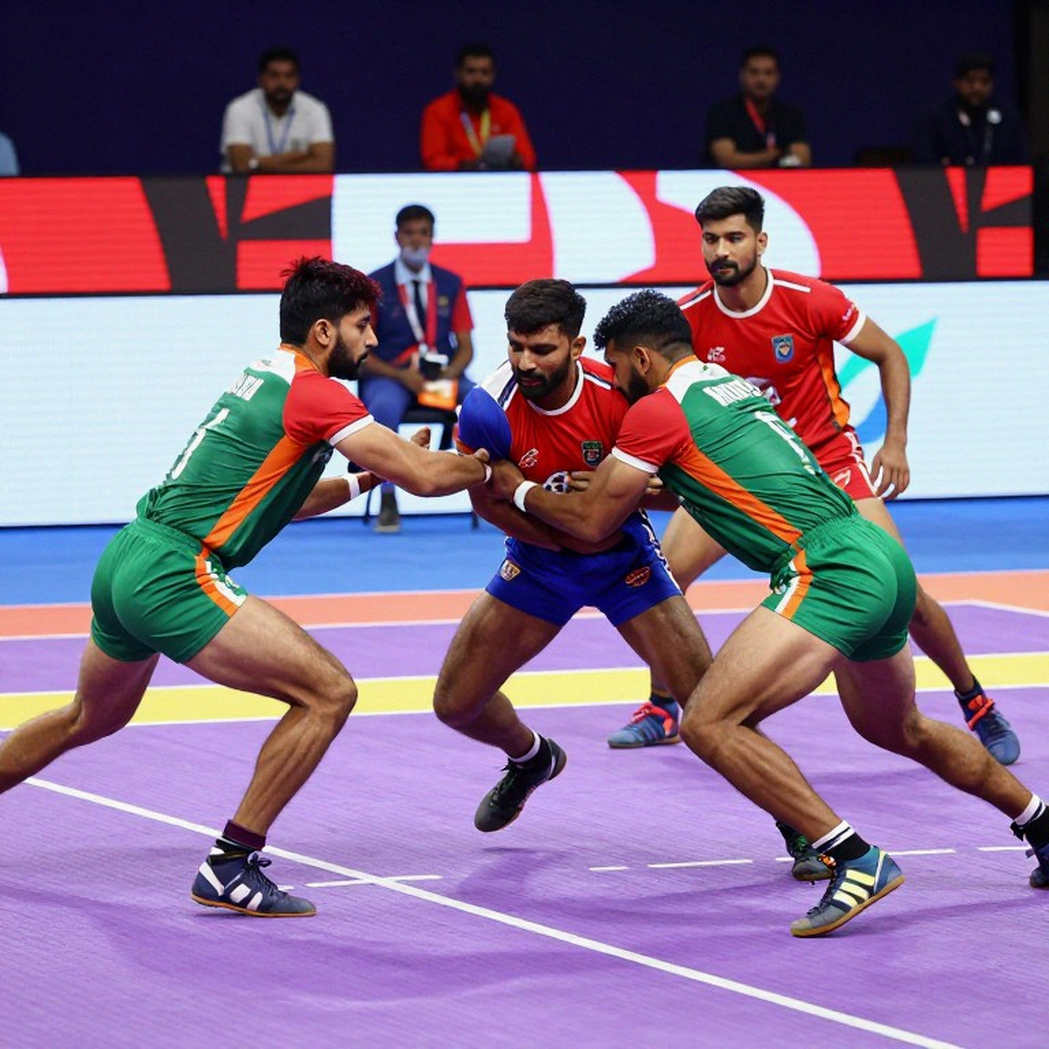
Iran and India embody two opposing philosophies of winning. Iran flattened Thailand 83-27, never letting them stand, stacking all-out after all-out, refusing to release a single raid. India stopped at 37-21 against Chinese Taipei; the match was already theirs, so they took no extra risk. One team weaponised the second scoreboard; the other used the first to bank energy. I have tracked both kinds of teams into the week after a final, and they wear their fatigue differently: front-runners tire in the legs, control teams tire in the head.
Chinese Taipei's 37-21 defeat is the most instructive performance of this group stage. They lost the match but managed the margin of defeat precisely enough to reach the semi-finals. Athletics has an old name for this: qualifying from a heat as a fastest loser. On the track you do not have to win your heat, you have to qualify; in kabaddi now you do not have to win the match, you have to protect the differential. Losing well has become a competitive skill in group-stage kabaddi. Nobody used to coach it, and it now decides medals. The split had not finished speaking, and the scoreboard had already ruled.
This is where Bangladesh's story hurts. Two wins, two losses, ordinary on paper, but one column kept them outside. Bangladeshi kabaddi culture carries something deep: you win, and you win with honour. The arithmetic of keeping your best raiders on the mat in the last two minutes to farm five more points is not part of our tradition. On Khulna grounds, in mud and heat, our raiders learn to survive, to reach out a hand after falling, to feel an opponent's breath go short. The arena is a laboratory where culture runs its own splits, and the new format's clock does not quite match Bangladesh's own kabaddi time. A team raised to start slow and explode late in humid conditions is not being punished unfairly, but it is being told a hard truth: this points table does not reward patience, it audits patience even after you have won.
Pakistan's elimination is the biggest structural story here. One of kabaddi's old powers lost 51-30 to Iran on the last day and will come home without a medal for the first time. Thailand, meanwhile, lost 83-27 and still finished second; the format does not punish defeat, it punishes margins. And Nepal's 73-52 win over Malaysia on the final day was not consolation: for teams ranked in the lower tier, one win becomes next cycle's budget, club programme and school intake. Malaysia and Korea both ended without a win despite domestic structures, which tells you the bottom of the table is standing still while the top moves away.
In 2026, when the Olympics were postponed, every meet on my calendar vanished. Instead of waiting, I organised a closed time trial at Khulna District Stadium: 12 athletes, no spectators, one camera, streamed on Facebook. The fastest 400m was 48.6 seconds, and seven of the twelve ran slower than their season bests under ideal conditions. I published the paradox instead of hiding it; the crowd was not the variable, the warm-up rhythm was. The ghost meet taught me that silence has a split time too. In the Asian Games matches that were already decided, the rhythm of the closing raids becomes the thing to watch. Thailand kept playing at 83-27 down, and those last minutes may have been their most valuable of the tournament.
There is a second market hidden under this performance. Kabaddi runs on auction cycles and fresh sponsorship money, and the uncomfortable truth is that many brands now occupying jersey space cannot name a club's neighbourhood; they read exposure ROI. Every transfer window is a relay handoff in the dark, and here the handoff is a player's price set by four group-stage days in which nobody counted his breath. In 2026 in Russia I logged a 14% drop in high-speed running for a Croatian midfielder and wrote that what we sell as mentality is often a pacing error. Kabaddi says the same: culture and fight can hide structural gaps. That page in my Russia notebook is still unfinished.
Now the contrarian part. Is this format producing competition, or producing medals? If the semi-final line-up always rests on equal wins and margins, coaches will rationally keep their best seven on the mat late against weak sides to inflate the differential. Dead matches then carry injury risk and produce lopsided humiliations. Thailand won their first medal in a tournament where they were beaten 83-27; that is not evidence of parity, it is evidence of a generous format. The sharpest paradox is this: the second scoreboard that decided the medals across four days will be worth nothing on semi-final day, because knockouts count wins, not margins. Iran's front-running style has looked magnificent, but in a single-elimination night one bad raid can erase three minutes of work. India's controlled style has drawn less attention and may be the more survivable one. Coaches must switch from margin mode to control mode overnight, and that pressure lands on the bench, not on the players' legs.
The semi-finals now wait, then the men's kabaddi gold medal match on September 26. These four days taught us that when a score leaves the table, it stops being decoration and becomes a selection tool. One question to leave open: when that second scoreboard goes dark on semi-final day, which team will actually be ready, the ones who played for the margin, or the ones who played to save their breath?